Table of contents
Managing land effectively often requires deciding between different equipment options, each designed for specific tasks and outcomes. Understanding the unique purposes of a mulcher and a chipper is key to optimizing site clearance, vegetation control, and debris disposal. Explore the features, advantages, and best-use scenarios for both tools to make an informed choice that maximizes productivity and land health.
Understanding mulchers
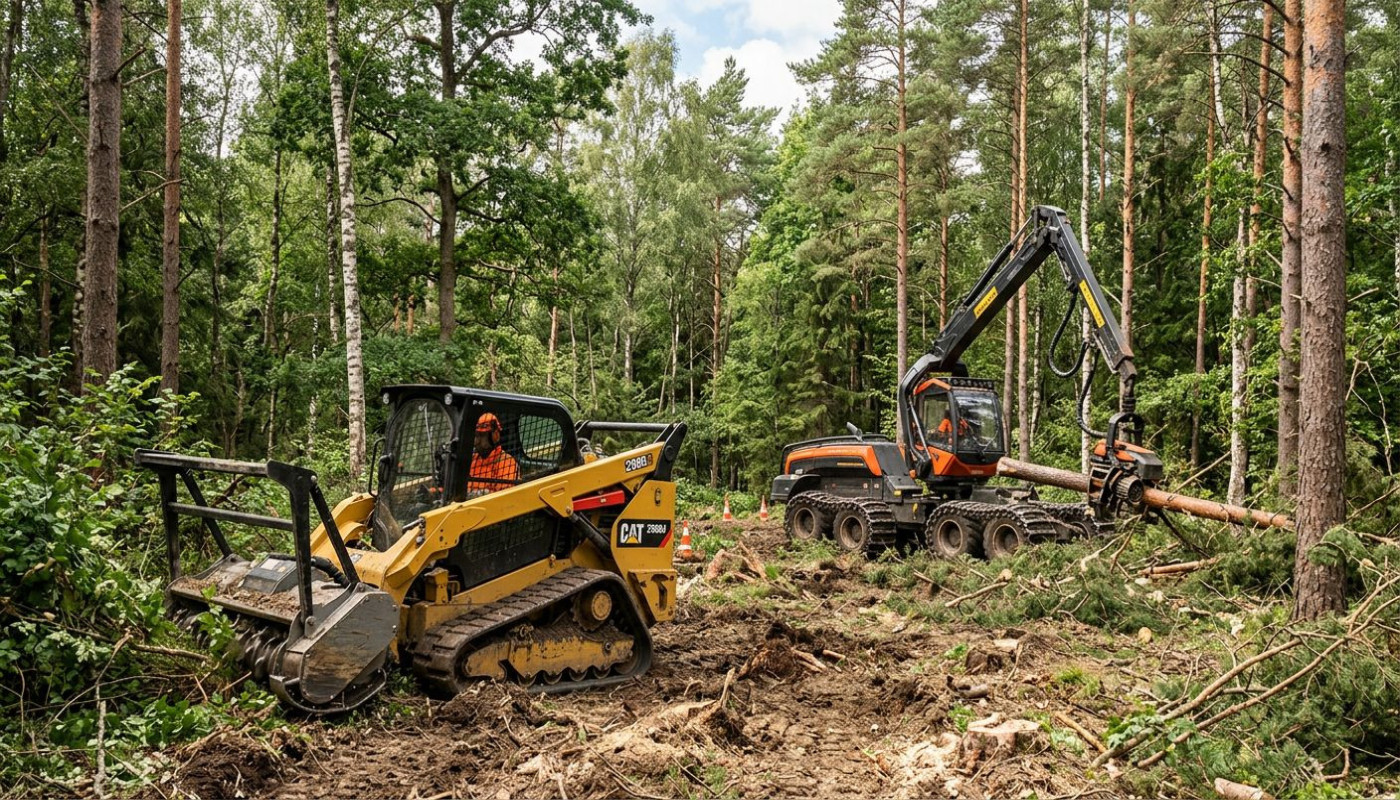
A mulcher is a specialized machine designed for land clearing and vegetation control by transforming thick undergrowth, brush, and small trees into fine, evenly distributed mulch. Using powerful rotating blades or hammers, the mulcher processes organic material on-site, reducing large volumes of vegetation into smaller particles in a single pass. This process, known as biomass reduction, not only clears land efficiently but also returns rich organic matter to the soil. Mulchers excel with brush, saplings, tall grasses, and small trees, making them suitable for maintaining trails, firebreaks, or overgrown fields. By leaving a layer of mulch on the ground, these machines improve soil health by conserving moisture, suppressing weed growth, and encouraging nutrient cycling, while also enhancing site cleanliness and minimizing the need for debris removal.
Exploring chippers
A chipper is a specialized machine engineered to process large branches, limbs, and even small logs, transforming bulky debris into manageable wood chips. Utilizing a robust internal feed mechanism, the chipper draws in woody material and directs it toward rapidly spinning blades or hammers, which slice and break down the input into uniform chips. This process ensures efficient debris disposal during land maintenance, making the chipper an indispensable tool when handling substantial volumes of woody waste generated by tree removal, storm cleanup, or ongoing forestry work. Chippers excel in scenarios where quick reduction of large-diameter wood is necessary, providing a practical solution for property owners or land managers aiming to maintain clear, unobstructed spaces, promote fire safety, or prepare sites for new growth. Their ability to convert difficult-to-handle materials into useful wood chips also supports mulching and erosion control initiatives, further enhancing their value in comprehensive land management strategies.
Comparing application scenarios
When considering mulcher vs chipper options for land management, the optimal choice often depends on several factors such as property size, vegetation type, and intended use of the processed material. For larger rural properties with dense underbrush, saplings, and mixed vegetation, mulchers excel due to their high throughput rate and ability to process material directly into fine mulch on site, aiding swift property maintenance and reducing debris transportation needs. In contrast, chippers are more suitable for smaller plots or areas where woody debris like tree branches and trunks dominate; their design enables efficient conversion of hardwood into chips, which can be repurposed for landscaping, biofuel, or composting. Equipment efficiency also varies, with mulchers providing continuous in-place processing, while chippers may require more handling but yield uniform chip sizes suitable for targeted reuse.
The decision ultimately rests on balancing throughput rate and the desired end-product. Those managing expansive tracts and focusing on ecosystem health might favor mulchers for their speed and mulch output, which supports soil retention and suppresses weeds. Property owners aiming for sustainable waste management or biomass generation could lean toward chippers, as their output is better suited for controlled applications. For a detailed examination of equipment choices tailored to different land management goals, consult the resources available at site for comprehensive guidance and specifications.
Environmental considerations
Selecting between a mulcher and chipper for land management involves assessing their environmental impact, particularly in terms of emissions, noise production, and overall effects on local ecosystems. Mulchers typically operate by shredding vegetation into fine material that is left on site, which can aid in ecosystem preservation by providing organic matter and reducing soil erosion. Chippers, on the other hand, process larger wood pieces into chips that might be removed from the area, potentially disrupting nutrient cycling. Both machines have a carbon footprint, but newer models often feature improved engine efficiency and emission controls to minimize air pollution. Noise levels are another factor; mulchers can generate low-frequency sound that travels further, while chippers often produce sharper, louder bursts, possibly disturbing local wildlife. Assessing which equipment aligns best with environmental stewardship goals depends on site-specific factors, including surrounding habitat sensitivity and the intended use of processed material.
Making the right choice
Determining whether to choose mulcher or choose chipper begins by carefully considering land management goals and the broader vision for sustainable land care. For projects aiming to clear vast areas of vegetation quickly with minimal soil disturbance, a mulcher delivers high efficiency by grinding organic material into fine particles that enrich the soil as mulch. In contrast, when the objective is to handle larger branches or tree trunks while producing usable wood chips for landscaping or bioenergy, a chipper might better meet project requirements. Budget constraints play a central role, but the focus should not be limited to upfront costs. The technical term total cost of ownership encompasses all expenses associated with acquiring, operating, maintaining, and eventually disposing of equipment—offering a comprehensive perspective on financial impact over the equipment’s useful life. Weighing these factors against the ecological benefits, such as soil health improvement and habitat preservation, supports informed decision-making for those seeking the most effective and responsible approach to land management.
On the same subject

